CMSP Prophetic Stand Against Corruption
45th Biennial Joint Convention of the Conference of Major Superiors in the Philippines (CMSP)
Cebu Grand Hotel, Cebu City | September 1–5, 2025
“Woe to those who make unjust laws,
to those who issue oppressive decrees” (Isaiah 10:1)
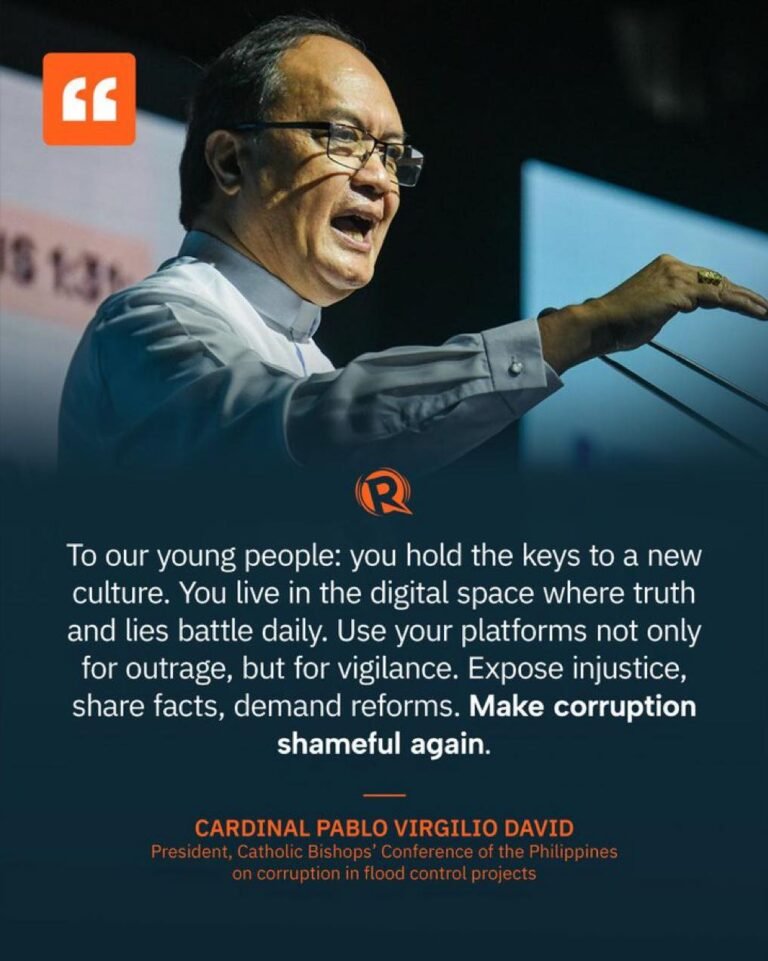
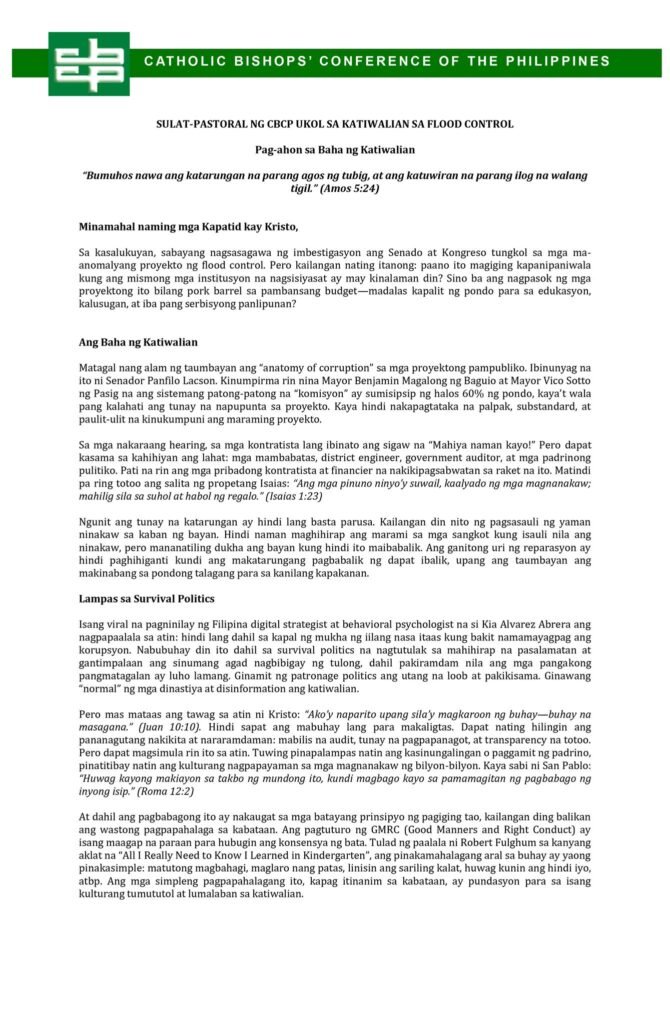
In our days together, we could not ignore the deep wound of corruption that bleeds our nation dry. We name it for what it is: a scandalous theft of the people’s dignity and a betrayal of the common good. As the prophet Isaiah warns: “Woe to those who make unjust laws, to those who issue oppressive decrees” (Isaiah 10:1). Corruption is not an abstract sin; it is a system that robs our children of education, denies the sick of health care, and condemns millions of Filipinos to poverty while a few enrich themselves. It is the face of injustice that we encounter in every community, in every family forced to struggle because leaders have chosen greed over service.
The Philippines ranks among the most corrupt countries in ASEAN, with Transparency International and the World Bank recording a steady decline in institutional quality and governance. Trust in government effectiveness, rule of law, and accountability continues to deteriorate. Despite being rich in natural resources such as nickel and coal, our nation remains poor. The reason is plain: unjust mining contracts, weak taxation, and policy capture by vested interests leave the common good hostage to private gain. The country has also suffered from declining foreign direct investment and persistently low GDP per capita—proof that corruption cripples not only morality but also economic growth. (References: 1) Transparency International, Corruption Perceptions Index 2024: Philippines scored 33/100, ranked 114th of 180; Asia-Pacific average: 44, global average: 43. 2) World Bank, Worldwide Governance Indicators—Control of Corruption percentile rank around 33rd percentile, with similarly modest scores across Government Effectiveness, Rule of Law, etc)
The weight of corruption is felt in our national debt, which ballooned after the pandemic. Yet borrowed funds are squandered on phantom infrastructure projects and political patronage, while essential services like health and education endure crippling budget cuts. The human cost is devastating: one in three Filipino children suffers from stunting, a silent emergency rooted in chronic underinvestment and systemic neglect. These are not mere statistics—they are the faces of our people, the wounds of our nation.
Our Prophetic Call
As consecrated persons, we cannot remain neutral. To keep silent in the face of corruption is to become complicit. We stand with the poor, whose cry for justice unmasks the rot of corruption. We echo their cry with a prophetic urgency:
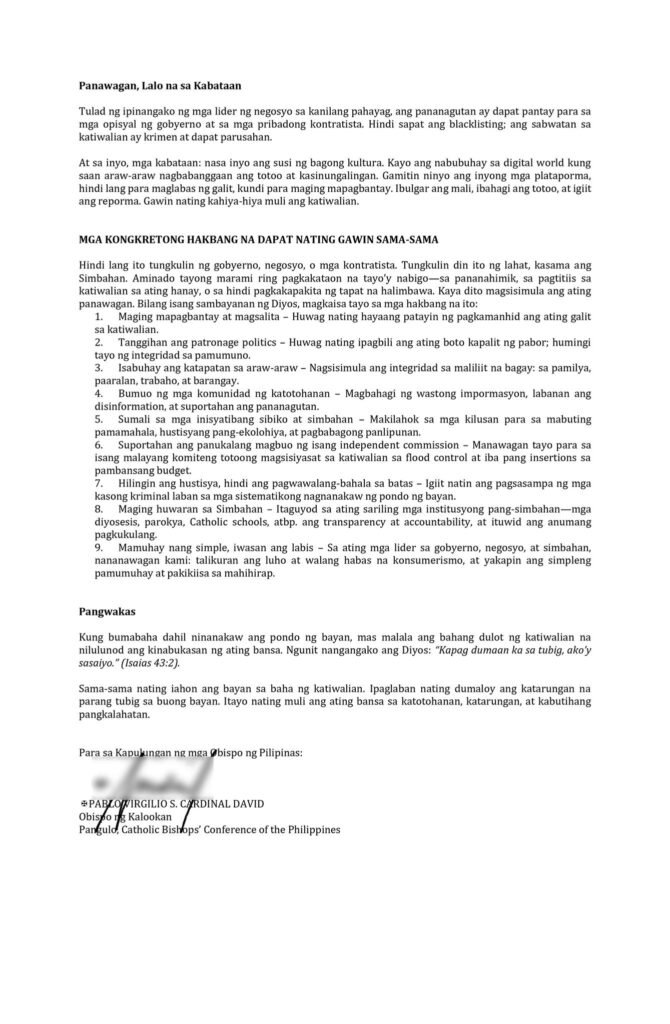
- We demand transparency in public contracts, especially in mining, taxation, and infrastructure projects.
- We call for accountability in the use of public funds, with independent investigations into corruption cases and an end to “dole-out” politics that enslaves the poor.
- We urge stronger civic action: local Freedom of Information ordinances, open legislative processes, and citizen oversight mechanisms must become the norm, not the exception.
- We reject constitutional manipulation used as a smokescreen to divert attention from institutional failure. True reform begins not with changing the rules of the game but with the conversion of hearts and the integrity of leaders.
We reaffirm that our fight against corruption is not merely political—it is Gospel witness. To live simply, to manage resources transparently in our own communities, and to stand with the poor are themselves acts of resistance. Amid the darkness of corruption, hope rises when consecrated life remains rooted in Christ, walking humbly and courageously with our people.
From our CMSP Convention here in Cebu City, we issue this call: Corruption kills hope; integrity rekindles it. In the spirit of the Jubilee of Hope, we commit ourselves anew to be pilgrims of justice and truth, so that together with our people, we may sow the seeds of a nation where governance serves the common good, and where hope is not betrayed.
In the service of CMSP
- LINO GREGORIO REDOBLADO, OFM (sgd)
Chairperson, CMSP
- CECILIA ESPENILLA, OP (sgd)
Vice Chairperson, CMSP